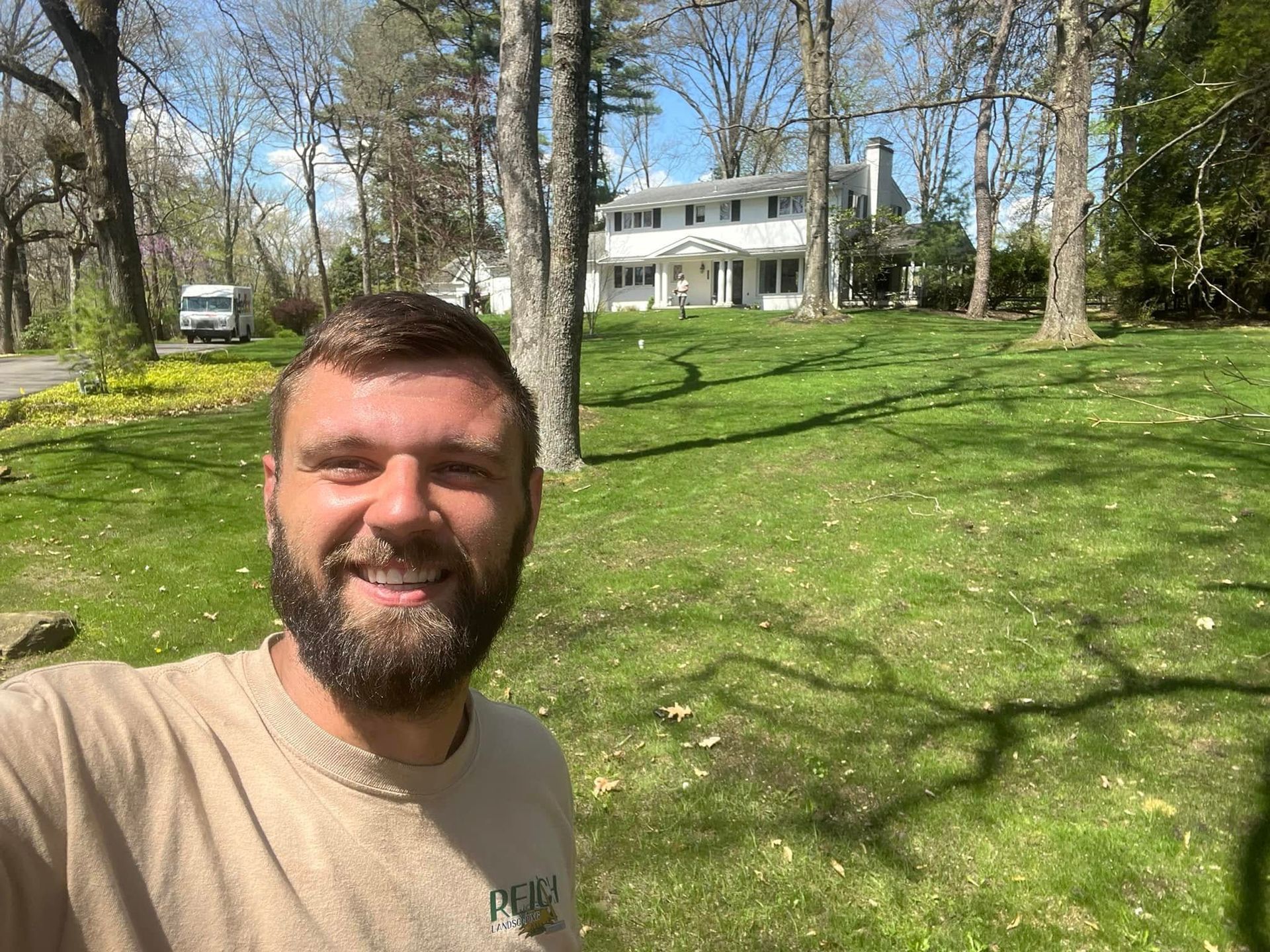
Installing a new law n is one of the best ways to boost your home’s curb appeal—but proper aftercare is what determines whether your grass thrives or struggles. At Reich Landscaping, we specialize in lawn installation in Butler County, using both traditional seeding and hydroseeding methods. Because Western Pennsylvania has its own unique soil and weather conditions, following the right aftercare steps is critical for success. Here’s how to protect your investment and grow a thick, healthy lawn. Watering Your Newly Seeded or Hydroseeded Lawn Watering is one of the most important parts of establishing a new lawn—especially in Butler County’s mix of clay-heavy soil and unpredictable weather. For seed and hydroseed lawns: Keep the soil consistently moist—not soaked, not dry Water lightly if and when the soil is dry, typically 2–3 times per day for the first 2–3 weeks Avoid heavy watering that causes puddling or runoff. The goal is a consistent moistness Early morning and late afternoon are best, but anytime is better than NO time! Hydroseeded lawns often retain moisture better thanks to the mulch layer, but they still need consistent watering to germinate properly. As your grass begins to grow, you can gradually reduce frequency and switch to deeper watering. Stay Off the Lawn (Temporarily!) We know it’s exciting to see your new lawn coming in—but foot traffic can quickly damage young grass before it establishes. Avoid walking on the lawn for at least 2–3 weeks Keep kids and pets off newly seeded areas Keep in mind that we just loosened the soil to allow roots to become established. The ground is going to be soft. Limiting traffic is key. When to Mow Your New Lawn Timing your first mow correctly helps your lawn thicken and establish strong roots. Wait until grass reaches about 4-6 inches tall Never cut more than one-third of the blade Use sharp mower blades to avoid tearing young grass For newly installed lawns, mowing too early can disrupt the developing root system, so patience pays off. Fertilizing for Strong Growth Healthy lawns need proper nutrients, especially in soils that may be compacted or low in organic matter. Starter fertilizer is applied during installation Apply a follow-up fertilizer 4–6 weeks later Avoid over-fertilizing, which can damage new grass As an additional offering, the team at Reich Landscaping can tailor fertilization plans based on your soil type to help get the best results. Dealing with Weeds in New Lawns It’s normal to see some weeds pop up during the early stages of your fresh lawn growing in. Avoid using herbicides until the lawn has been cut 3-4 times and is established Lawns installed during the spring season are up against more weed seeds in the air that can lead to weedy lawns Regular mowing will help control many weeds naturally Most new lawns will fill in and outcompete weeds over time If needed, we can recommend safe weed control options for Western PA lawns. Watch for Trouble Spots Keep an eye on your lawn as it grows. Catching issues early makes a big difference. Germination begins between 2 and 3 weeks after your lawn has been planted. During this time grass will come in uneven. Oftentimes areas that are coming in as strong as others may be lacking moisture. After about week 3- we can accurately assess troubled areas. After week 3, look for: Dry or patchy areas (often a watering issue) Uneven germination Washout after heavy rain (common in the hills of Butler County) If you notice any of these, minor adjustments can usually fix the problem quickly. Western PA Weather Tips Lawn care in Butler County and Western Pennsylvania comes with a few extra considerations: Spring & Fall are the best times for seeding and hydroseeding Summer heat will require more frequent watering Heavy rain can cause seed washout—especially on slopes Cool nights can slow germination but usually improve long-term results Final Thoughts A successful lawn installation doesn’t stop when the seed goes down. With proper aftercare, your seeded or hydroseeded lawn will establish quickly and grow into a thick, healthy yard you can enjoy for years. If you have questions about watering, mowing, or anything else, we’re always here to help. Looking for Lawn Installation in Butler County, PA? We offer professional: Lawn seeding Hydroseeding Lawn repair and renovation Contact Reich Landscaping today to schedule your estimate and get your lawn started the right way!
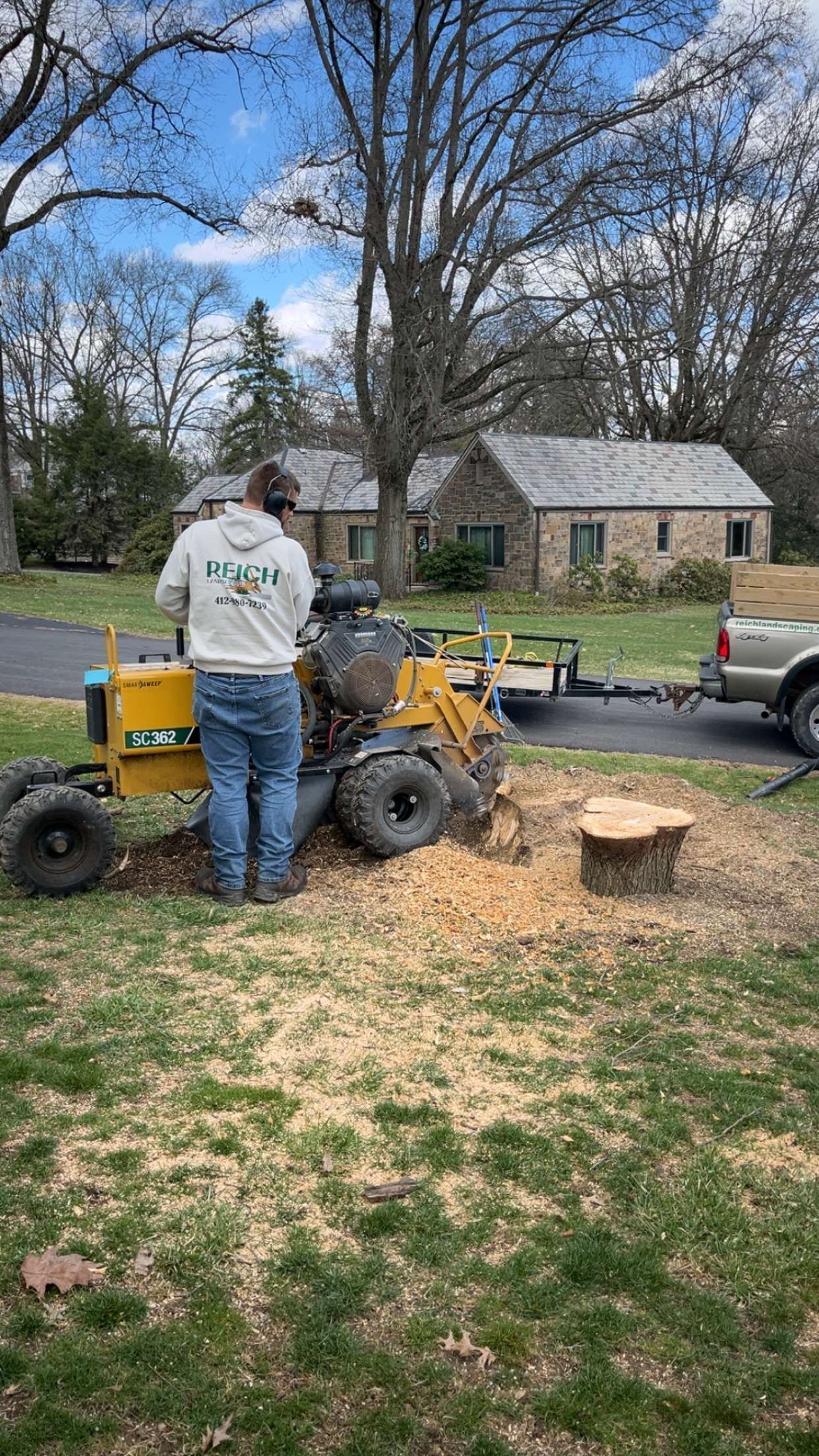
What people don’t know is that before the crew at Reich Landscaping was helping their neighbors in Mars, Cranberry, Saxonburg and other areas in Western Pennsylvania with landscaping, we were known for one thing : stump grinding and removal. In fact, I was known as “the stump guy”. Side note, even my Facebook Business Page is still “MR Stump Grinding” - what can I say, I love getting my hands dirty removing pesky stumps and trunks from the ground. What makes removing stumps so cool was the fact that I can be a reset for many homeowners. I could be someone that takes away one of the most annoying parts of landscaping. After all, how many times have you tripped up or even stubbed your toes or foot on a leftover remnant of a tree or bush? Not fun, right? Butler County is a really nice mix of landscapes - in fact all of Pennsylvania is. We get to deal with homeowners and landowners on rolling proper, flat lands from residential development that used to be farms and even multiple generation homeowners that “remember when they planted that oak tree”. Today, I wanted to talk about how important stump removal can be as a “reset button” for your lawn or yard. We are going to talk about the process, tools we use and help you determine what your best options are. One thing to mention - even if you don’t need stump removal services in Mars , this article might be for you. After all, Mars, Cranberry and other areas in Western Pennsylvania don’t hold the monopoly on problematic pine, oak, maple and firs! The Problem: Stumps, Roots and Obstacles … OH MY! Here’s the issue… You’ve done a lot of landscaping. Between hiring some crews and doing some work on your own, you’ve finally cleared the last of the trees, shrubs and bushes that needed to be gone! And now, you can begin the next step, right? Well, not yet! If you go back and visit the dearly departed trees and shrubs, you’ll notice a knot of annoyance, or a small trunk that will break a lawnmower blade, or even a grouping of roots and would love nothing more than to reach out and trip a human. Not quite great … yet. Stumps, remaining trunks, roots, shrub roots and other debris are obstructions in your yard that are hidden hazards. As we’ve covered, these can be annoying at best, and at worst, they can break equipment and actually hurt you and your family. The other side of the impact is on aesthetics in your lawn. A large stump might look cool if you are a Lord of the Rings fan and know some hobbits. But, if you are like me, they become an obstacle and an annoyance in how your yard looks and functions. Yes… they need to go! Our Removal Process Defined (The Grinding Reset) The team at Reich Landscaping will never simply show up and start deleting stumps and roots and debris. We will, but first, we need to examine the land. We have a ton of combined experience in handling stump removal so that it only impacts your land in a positive way - safety goes way up and we make it look pretty! We do not want to create future problems - pest infestation, soil depression, underground utility restrictions, etc. Basically, we talk, plan and investigate before we just dig. When we have a plan in place, it’s time to start the initial cut. We grind and remove the remaining portion of the stumps and roots. Brush and other debris will be isolated and removed. The main event: stump grinding . Stump grinding is a fairly straightforward process: Grind the stump until below ground At Reich Landscaping, depending on the land and project, you can expect us to grind the stumps down 4 to 6 inches below ground (we can go lower, but that’s our average). This helps to eliminate regrowth and make re-soiling easier. Plus, it is a sufficient depth to allow for solid grass and lawn creation. The cleanup that is essential After stump grinding, you can expect about 3 times the size of the impression we grind. This debris will be a mix of mulch, wood chips, dirt and more. In many cases, our customers like to have us haul it away for them, rather than leave it and deal with it. The All New And Improved Yard: A True Masterpiece! “A masterpiece” might sound like a promotional phrase, but it’s what we believe. We know our neighbors in Valencia, Seven Fields, Callery and Glade Mills value their lawns; I value my home’s lawn, after all! Our goal is not to remove, cut and be gone. We want to help your lawn reach its potential. We want to help your lawn become that masterpiece. And stumps, debris and holes won’t do it. During the process of stump grinding and stump removal, we are always keeping in mind that the process isn’t the same as the finished product. After the stump is gone, we then focus on soil preparation including leveling, new grass and land depression avoidance. As you can see, we always use the words “smoothing” in relation to “stump removal” - they go hand in hand. Are you ready to discover your lawn’s real beauty? For Reich Landscaping, the issue of stump grinding is something we love to help our neighbors solve. Being a homeowner in Mars, Saxonburg, Cranberry, Evans City and Butler means that stump removal and stump grinding is a necessity, not a choice. Eventually, you need to remove those bumps and stumps before they become pest situations, tripping hazards and painful eye-sores. Reich Landscaping started as MR Stump Grinding. We know the area, we know the aspects of what removal and grinding can cause (the good and bad) and we want to help make your land beautiful; a true masterpiece! When you are ready to discuss real solutions on your property, and you live in Butler County, give us a call at (412)528-5080 today!
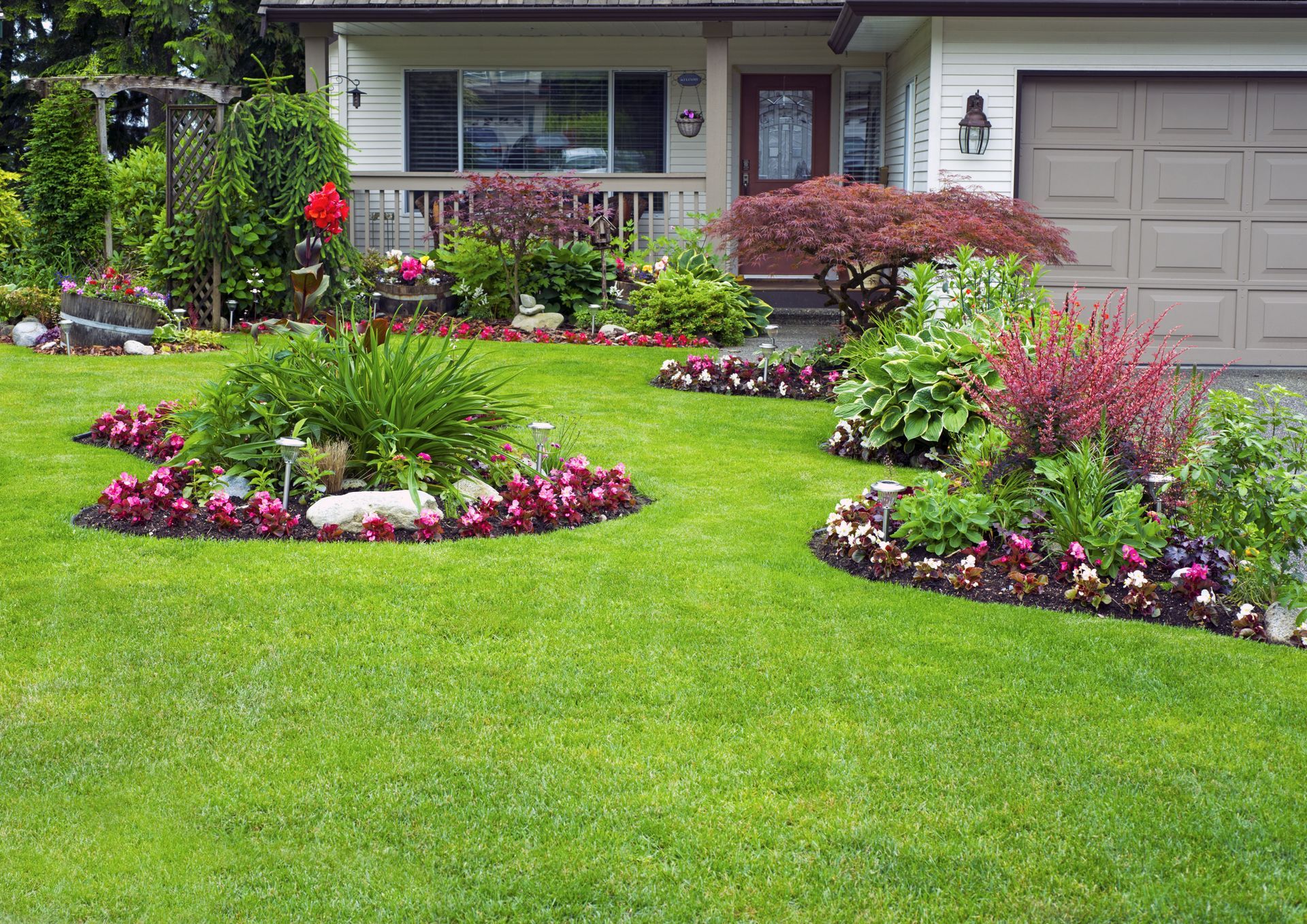
Discover key tips for choosing local landscaping services that fit your vision, timeline, and budget for a successful outdoor project.

There are a few great ways that landscaping companies can transform your outdoor space. Keep reading or contact us today to learn more.